Pressure Reducing Desuperheating Station Manufacturers in India
Pressure Reducing Desuperheating Station Manufacturers in India
Advanced Pressure Reducing Desuperheating Station (PRDS Station) Solutions for High-Efficiency Steam Control Systems
Thermin Energy Systems Pvt. Ltd. is a leading Pressure Reducing Desuperheating Station manufacturers in India, suppliers and exporters in India. These are engineered for efficient steam pressure management, temperature control, and optimized industrial process performance. Designed with precision steam conditioning technologies and high-performance thermal regulation assemblies, these integrated systems help industries achieve controlled steam distribution while reducing operational losses and improving energy utilization.
Modern Pressure Reducing Desuperheating Station units, also known as PRDS Station, PRDS systems, and integrated Steam Desuperheaters, are increasingly adopted with automation-enabled monitoring, predictive diagnostics, and Industry 4.0 compatibility for enhanced operational reliability.
What is a Pressure Reducing Desuperheating Station?
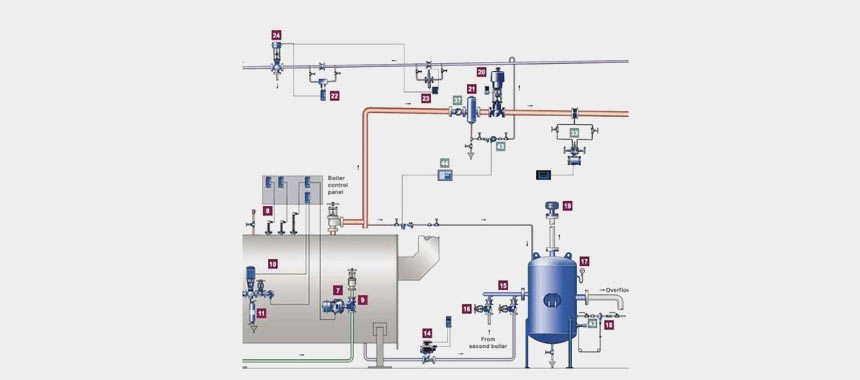
A Pressure Reducing Desuperheating Station is an integrated steam conditioning system developed to simultaneously reduce steam pressure and control steam temperature before distribution to downstream industrial processes. The system combines pressure reduction mechanisms with desuperheating technology to convert high-pressure superheated steam into controlled-pressure steam with the desired temperature profile.
How Does a Pressure Reducing Desuperheating Station Work?
Steam Inlet: High-pressure superheated steam enters the PRDS from the steam generation source.
Pressure Reduction: The pressure reducing valve lowers steam pressure to the required operating level while maintaining stable flow.
Desuperheating Process: Steam desuperheaters inject atomized cooling water through spray nozzles to reduce steam temperature.
Automatic Control: Sensors continuously monitor pressure and temperature and adjust valve and water flow automatically.
Conditioned Steam Output: Steam is delivered at controlled pressure and temperature for efficient and reliable process performance.
What are the Different Types of Pressure Reducing Desuperheating Station Systems?
A well-known Pressure Reducing Desuperheating Station manufacturers in India, we are providing the best quality Pressure Reducing Desuperheating Station such as:
Single Stage Pressure Reducing Desuperheating Station These systems are designed for moderate steam pressure reduction and temperature conditioning applications where operational simplicity is important. Advanced actuator-controlled valves and smart sensors improve response speed and thermal accuracy. They are commonly selected for process steam lines requiring stable and economical steam regulation.
Multi-Stage Pressure Reducing Desuperheating Station Multi-stage PRDS Station configurations enable gradual pressure reduction to improve equipment life and reduce vibration effects. Integrated digital control loops and adaptive steam management algorithms enhance operating efficiency under variable load conditions. These systems are suitable for high-capacity industrial environments requiring precision steam delivery.
Automated Intelligent PRDS Systems These advanced systems combine PLC-based automation with real-time monitoring for continuous performance optimization. Predictive maintenance analytics and remote diagnostics support reduced downtime and improved process visibility. Industries implementing Industry 4.0 initiatives increasingly prefer these intelligent steam conditioning platforms.
Customized Integrated Steam Desuperheaters Stations These engineered systems are designed according to process-specific pressure, temperature, and flow requirements. Enhanced CFD-based internal design and optimized spray technology improve heat transfer efficiency and operational stability. They are highly suitable for specialized industrial applications requiring customized steam conditioning.
What are the Key Features of Modern Pressure Reducing Desuperheating Station Solutions?
One of the leading Pressure Reducing Desuperheating Station suppliers in India, our all-types of Pressure Reducing Desuperheating Station are included with new technological formulations such as:
Intelligent Steam Flow Regulation Technology Advanced control algorithms continuously adjust steam parameters for consistent process output. Integrated monitoring sensors improve operational precision and minimize pressure fluctuations. This supports higher plant efficiency with lower energy consumption.
High-Efficiency Thermal Conditioning Assembly Optimized desuperheating architecture enables uniform cooling and rapid steam stabilization. Advanced nozzle geometry improves atomization and enhances thermal exchange performance. This contributes to improved process consistency and reduced thermal stress.
Smart Industrial Automation Integration Modern PRDS systems support connectivity with SCADA, DCS, and industrial communication platforms. Remote performance visualization enables faster operational decision-making. Data-driven diagnostics also improve maintenance scheduling.
Proof Block – Performance Validation of Pressure Reducing Desuperheating Station Technology
Testing Timeline: Continuous validation conducted across a simulated operational cycle covering pressure variation, load transition, and sustained operation phases.
Environmental Conditions: Evaluation performed under high-temperature steam environments, fluctuating flow demand, controlled cooling water conditions, and industrial thermal stress scenarios.
Reviewer Background: Assessment reviewed by industrial steam process specialists and thermal systems engineering professionals with experience in process optimization and steam conditioning technologies.
Measured Outcomes: Stable pressure reduction performance, improved steam temperature consistency, reduced response time, and enhanced operational efficiency under dynamic process conditions.
Industrial Case Study – Steam Optimization through Advanced PRDS Systems
Case Study: Process Steam Efficiency Improvement in Industrial Manufacturing
Industry Segment: Process Manufacturing2. Challenge: Inconsistent downstream steam pressure resulting in production interruptions and elevated thermal losses.3. Implemented Solution: Deployment of a modern Pressure Reducing Desuperheating Station integrated with automated control architecture and advanced Steam Desuperheaters.4. Result: Improved steam quality, enhanced process consistency, lower operational fluctuations, and increased overall plant efficiency.
Where is Pressure Reducing Desuperheating Station Systems Used?
Being the best Pressure Reducing Desuperheating Station exporters in India, our all types of Pressure Reducing Desuperheating Station are included with new feature and highly used in multiple applications such as:
Thermal Power Generation Facilities These stations regulate steam pressure and temperature for turbine protection and process efficiency. Advanced steam conditioning improves load flexibility and operational reliability. Modern facilities increasingly implement automated PRDS Station technologies for optimized energy output.
Chemical and Petrochemical Processing Plants Controlled steam conditions support precise reaction environments and process consistency. Intelligent monitoring reduces process variation and improves production quality. Advanced Steam Desuperheaters enable enhanced thermal management across complex process networks.
Food and Pharmaceutical Manufacturing These industries require highly controlled steam conditions to maintain production quality standards. Automated steam conditioning supports hygiene-focused and repeatable process operations. Integrated monitoring systems improve process validation and compliance performance.
Paper, Textile, and Process Manufacturing Industries PRDS systems provide stable steam supply for drying, heating, and process applications. Enhanced temperature control improves product consistency and reduces energy losses. Smart operating systems also enable improved production efficiency.
Thermin Energy Systems Pvt. Ltd. is a leading Pressure Reducing Desuperheating Station manufacturers in India, suppliers and exporters in India. We continues to support industrial steam operations with advanced Pressure Reducing Desuperheating Station solutions designed for precise pressure reduction, intelligent desuperheating control, and long-term process efficiency. With modern PRDS systems, integrated Steam Desuperheaters, and technology-driven engineering approaches, industries can achieve reliable steam conditioning, improved energy performance, and optimized operational productivity. Contact us today for more information!
Frequently Asked Questions (FAQs)
A combined PRDS Station delivers simultaneous pressure reduction and temperature conditioning while reducing installation complexity and improving operational coordination.
Modern systems use intelligent control mechanisms, automated monitoring, and optimized desuperheating methods to reduce steam losses and maintain stable operating conditions.
Power plants, food processing units, pharmaceutical facilities, chemical industries, and process manufacturing sectors benefit significantly from controlled steam management.
Yes, modern systems can be engineered based on required steam pressure, operating temperature, flow rates, automation requirements, and process-specific conditions.